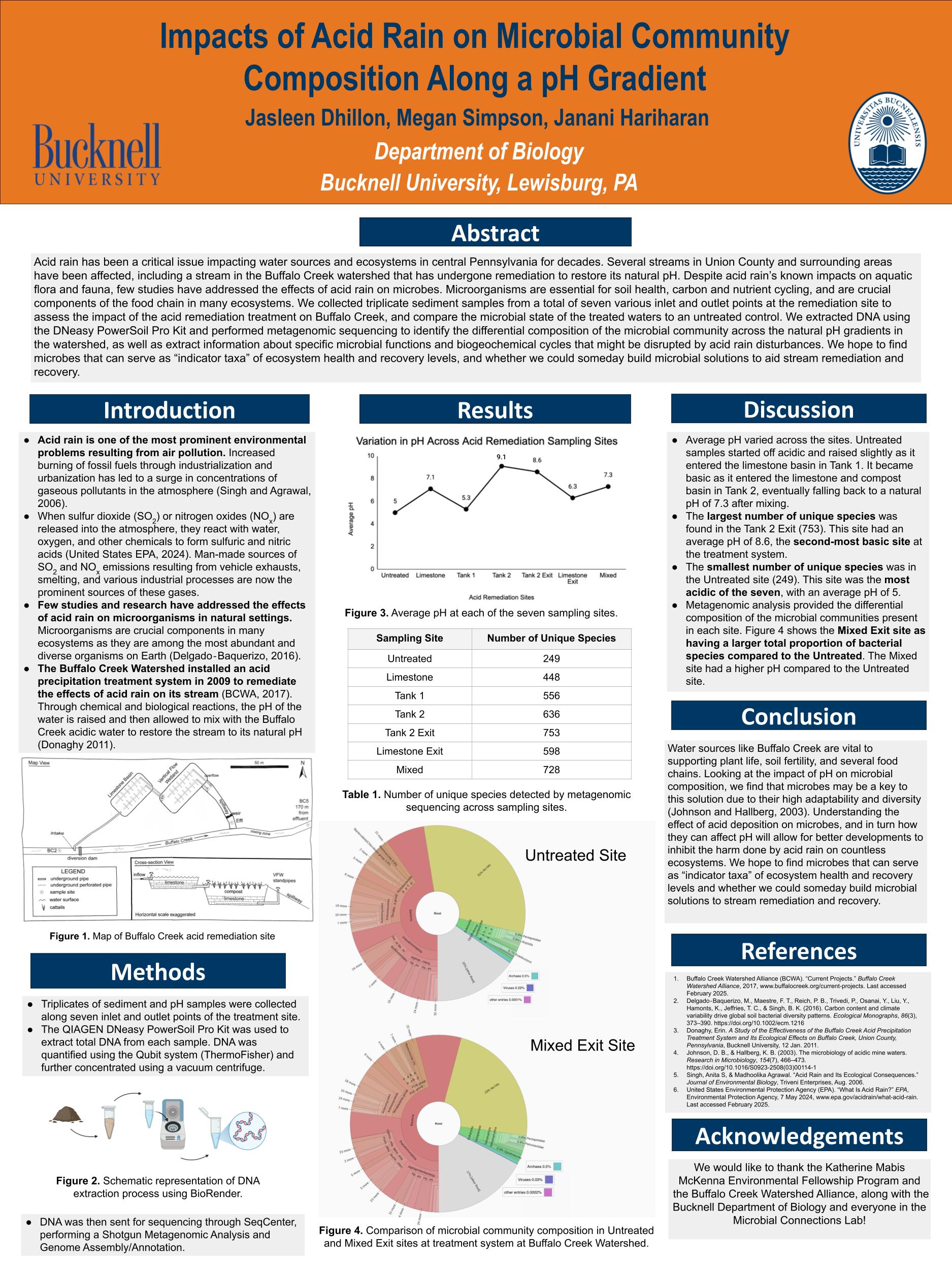
Impacts of Acid Rain on Microbial Community Composition Along a pH Gradient
Author:
Jasleen Dhillon ’26Co-Authors:
Megan SimpsonFaculty Mentor(s):
Janani Hariharan, BiologyFunding Source:
Katherine Mabis McKenna Environmental Fellowship Program & Bucknell Biology DepartmentAbstract
Acid rain has been a critical issue impacting water sources and ecosystems in central Pennsylvania for decades. Several streams in Union County and surrounding areas have been affected, including a stream in the Buffalo Creek watershed that has undergone remediation to restore its natural pH. Despite acid rain’s known impacts on aquatic flora and fauna, few studies have addressed the effects of acid rain on microbes. Microorganisms are essential for soil health, carbon and nutrient cycling, and are crucial components of the food chain in many ecosystems. We collected triplicate sediment samples from a total of seven various inlet and outlet points at the remediation site to assess the impact of the acid remediation treatment on Buffalo Creek, and compare the microbial state of the treated waters to an untreated control. We extracted DNA using the DNeasy PowerSoil Pro Kit and performed metagenomic sequencing to identify the differential composition of the microbial community across the natural pH gradients in the watershed, as well as extract information about specific microbial functions and biogeochemical cycles that might be disrupted by acid rain disturbances. We hope to find microbes that can serve as “indicator taxa” of ecosystem health and recovery levels, and whether we could someday build microbial solutions to aid stream remediation and recovery.